
Cómo pueden los fabricantes utilizar Agentic Workflow Automation para conectar Epicor Kinetic y SugarAI.
Un manual de implementación paso a paso para los COOs, CIOs y líderes de operaciones de ingresos en fabricantes de tamaño medio que quieren que ventas, inventario y cumplimiento funcionen con los mismos datos, sin proliferación de código personalizado ni otro proyecto de integración fallido.

Christian Wettre
EVP, GM North America

Gonzalo Nuñez
Chief Technology Officer
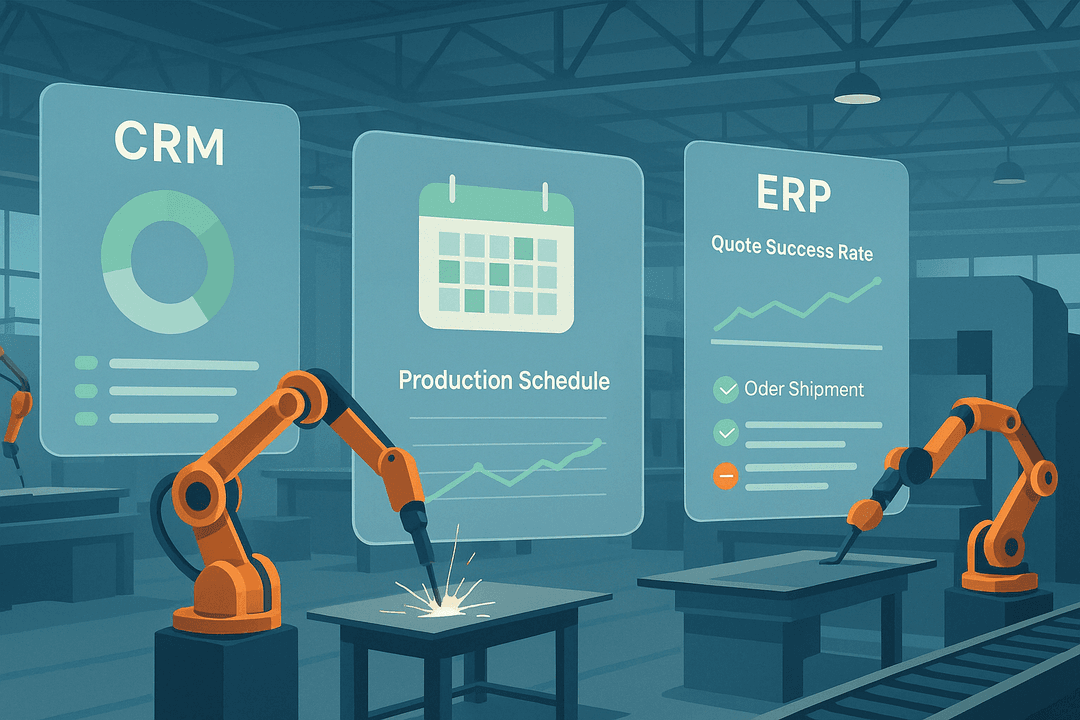
Tu representante de ventas cierra un trato. Luego comienza el verdadero trabajo: perseguir el estado del inventario desde operaciones, enviar un correo a finanzas para una confirmación de precio, y esperar a que alguien introduzca manualmente el pedido en Epicor Kinetic. Para cuando el cliente recibe la confirmación, tres personas han tocado los mismos datos en tres sistemas diferentes.
Eso es trabajo de silla giratoria. Y para los fabricantes, no es una ineficiencia menor. Es una brecha estructural que distorsiona la precisión de precios, retrasa el cumplimiento y erosiona la confianza del cliente una transferencia manual de datos a la vez.
La solución no es más funciones de software. Es orquestación. La automatización de flujos de trabajo con enfoque agente para fabricantes conecta Epicor Kinetic y SugarAI (anteriormente SugarCRM) a nivel de proceso, de modo que las acciones de ventas desencadenan la verdad operativa y los cambios operativos vuelven a los equipos de ingresos en tiempo real. Sin reingreso de datos. Sin retrasos. Sin confusiones de versión entre lo que dice el CRM y lo que sabe el ERP.
Esta guía le muestra cómo llegar allí: qué flujos de trabajo automatizar primero, cómo implementar sin crear proliferación de código personalizado y qué errores evitar antes de escalar.
Qué significa realmente la Automatización de Flujos de Trabajo con Enfoque Agente en una Pila de Manufactura
Quita el bombo por un momento. La automatización de flujos de trabajo con enfoque agente significa que el software puede detectar el contexto, activar las siguientes acciones y mover el trabajo entre sistemas, con menos intervención humana en cada paso.
Eso es diferente de un chatbot. Y es diferente de una simple integración que empuja registros de una base de datos a otra.
En un entorno de manufactura, el caso de uso real se ve así:
- No esto: una función de IA dentro de Epicor Kinetic que resume tus órdenes abiertas.
- No esto: un tablero de SugarAI que puntúa leads usando únicamente datos históricos del CRM.
- Esto: un flujo de trabajo orquestado donde un representante que actualiza una oportunidad en SugarAI extrae automáticamente precios en vivo, inventario y estado de crédito del cliente desde Epicor Kinetic, y cuando la cotización se convierte, el pedido regresa al ERP sin que nadie toque un teclado dos veces.
Epicor Kinetic y SugarAI ya contienen los datos operativos y comerciales en los que se apoya su negocio. La capa que falta no es más datos. Es la orquestación entre ellas.
"La automatización a menudo se estanca en límites de sistema que involucran ERP, MES y sistemas de la cadena de suministro debido a transferencias de datos manuales y flujos de trabajo desconectados." - Tech Implement
Ese límite es exactamente donde la automatización de flujos de trabajo con enfoque agente demuestra su valor. Según Deloitte, la IA puede automatizar hasta el 40% de las tareas repetitivas de ERP y reducir el esfuerzo de procesamiento manual entre un 20% y un 50%. Las mejoras son reales, pero solo cuando la automatización cruza las líneas entre sistemas, no solo cuando optimiza dentro de ellos.
Por qué el Trabajo de Silla Giratoria es el Verdadero Problema de Automatización
La mayoría de las conversaciones sobre automatización en manufactura se enfocan en lo que sucede dentro de un solo sistema. Pero el mayor punto de fricción no está dentro de Epicor Kinetic ni dentro de SugarAI. Es la brecha entre ellos.
Aquí está lo que esa brecha le cuesta cada día:
- Un representante de ventas cotiza un precio que fue preciso la semana pasada pero no hoy, porque los costos de BOM en vivo se actualizan en Epicor, no en CRM.
- Un pedido se introduce manualmente en Epicor después de que se cierra el trato, lo que introduce retrasos y errores de transcripción.
- Operaciones no tienen visibilidad del pipeline, por lo que la programación de la producción reacciona a sorpresas en lugar de pronosticar a partir de señales de demanda.
- El servicio al cliente consulta dos sistemas para responder una pregunta sobre el estado del pedido.
Este no es un problema de personas. Es un problema de arquitectura. Y se agrava. Según Redwood's 2026 Manufacturing AI and Automation Outlook, el 98% de los fabricantes están explorando la automatización impulsada por IA, pero solo el 20% se siente completamente preparado para implementarla a gran escala. La brecha entre la ambición y la ejecución casi siempre tiene raíz en sistemas desconectados, no en la falta de herramientas de IA.
La automatización de flujos de trabajo con enfoque agente cierra esa brecha al tratar a Epicor Kinetic y SugarAI como dos partes de un único sistema operativo, y no como dos plataformas separadas con una sincronización periódica entre ellas.
Los 5 Flujos de Trabajo para Automatizar Primero entre Epicor Kinetic y SugarAI
No todos los flujos valen la pena automatizar primero. Priorice basándose en tres criterios: cuán a menudo el proceso requiere transferencia manual, cuán alto es el riesgo de error que conlleva esa transferencia y cuán directamente afecta los resultados orientados al cliente.
Aquí están los cinco puntos de inicio de mayor valor para los fabricantes:
1. Ejecución de Cotización a Pedido
Un representante elabora una cotización en SugarAI usando precios en vivo, costos de BOM y disponibilidad de producto extraídos directamente de Epicor Kinetic. Cuando la cotización es aceptada, el pedido pasa al ERP automáticamente. Sin reingreso de datos. Sin retrasos. Los agentes de IA pueden ahora ejecutar procesos de ventas de múltiples pasos de forma autónoma, comprimiendo los ciclos de respuesta de horas a segundos.
2. Visibilidad de Precios e Inventario en Tiempo Real
Los representantes de ventas acceden a los costos actuales de material, tasas de mano de obra y niveles de stock desde SugarAI, sin enviar solicitudes de adquisición ni esperar un informe de ERP. Las búsquedas de precios se terminan.
3. Sincronización de Cuentas de Clientes y Estado de Pedidos
Cuando un pedido se envía, se registra un pago o se activa una retención de crédito en Epicor Kinetic, SugarAI lo refleja de inmediato. El servicio al cliente y los gerentes de cuentas siempre ven la misma realidad que las operaciones.
4. Alertas de Cumplimiento y Entrega
Las notificaciones automáticas se disparan en SugarAI cuando los hitos del pedido se alcanzan en Epicor: producción completa, envío, retraso. Los representantes dejan de perseguir actualizaciones de estado y empiezan a gestionar las excepciones.
5. Cobranzas y Escalamiento de la Salud de la Cuenta
Los saldos vencidos o violaciones del límite de crédito en Epicor disparan alertas de salud de cuenta en SugarAI, marcando cuentas en riesgo antes de que se conviertan en problemas de ingresos.
El hilo común: cada flujo de trabajo comienza con una acción o evento de CRM y se resuelve en la verdad del ERP, o viceversa. La investigación de McKinsey muestra que la IA conectada a datos operativos puede reducir los errores de pronóstico hasta en un 50%. Esa precisión solo se materializa cuando los datos fluyen en ambas direcciones, en tiempo real.
Cómo Implementar la Automatización de Flujos de Trabajo con Enfoque Agente sin Proliferación de Código Personalizado
La forma más rápida de detener una iniciativa de automatización es empezar a construir integraciones personalizadas para cada flujo de trabajo. Acaba con conexiones frágiles punto a punto, alto costo de mantenimiento y usuarios del negocio que no confían en los datos porque se rompen cada vez que alguien actualiza Epicor.
La mejor arquitectura trata al ERP y al CRM como sistemas de registro y de compromiso, respectivamente, y usa una capa de orquestación para coordinar entre ellos. Ese es el papel que Fluent desempeña en un entorno de Epicor Kinetic y SugarAI. Es el puente, no el destino.
Aquí está la secuencia de implementación que funciona:
Paso 1: Mapea el proceso antes de tocar la tecnología. Identifica quién dispara el flujo de trabajo, qué datos de ERP necesita el CRM, qué decisiones pueden automatizarse y dónde una intervención humana debe permanecer en el bucle. Como señalan Redwood, diseñar la automatización alrededor de procesos, no de tareas, permite evolución continua.
Paso 2: Usa acceso a datos en vivo, no copias de registros. En lugar de sincronizar conjuntos de datos enteros de Epicor en SugarAI, surfacea datos de ERP en vivo a medida que se necesitan. Como hemos escrito antes, esta arquitectura minimiza la duplicación de datos al mostrar datos de ERP en vivo en tiempo real en lugar de sincronizar copias constantemente. Menos copias significan menos conflictos.
Paso 3: Defina límites de sincronización bidireccional. No todo debe fluir en ambas direcciones. Decida qué registros son propiedad de Epicor Kinetic (pedidos, precios, inventario), cuáles son propiedad de SugarAI (oportunidades, contactos, actividades) y cuáles se comparten con reglas de propiedad claras.
Paso 4: Construya manejo de excepciones antes de escalar. Cada flujo de trabajo automatizado necesita guardarraíles: qué ocurre cuando una retención de crédito bloquea un pedido a mitad de cotización, quién recibe la notificación cuando un precio ha cambiado desde que se creó la cotización, y cómo se registran y resuelven los conflictos.
Paso 5: Comience con un flujo de trabajo, pruebe el modelo y luego expanda. Los proyectos de Gartner estiman que el 70% de las organizaciones cambiarán a arquitecturas ERP componibles para 2026. Composable significa modular: se añade orquestación en capas, no en un único despliegue de gran magnitud. Comience con cotización a pedido. Demuestre la integridad de los datos. Luego agregue visibilidad de cumplimiento y alertas de salud de la cuenta.
Este enfoque mantiene a Epicor Kinetic como el sistema de registro operativo y a SugarAI como el sistema de compromiso con el cliente, con Fluent coordinando las transferencias entre ellos para que ninguno de los sistemas tenga que convertirse en algo para lo que no fue diseñado.
Un Ejemplo Práctico: De Cotización en SugarAI a Ejecución de Pedido en Epicor Kinetic
Así se ve esto de extremo a extremo en un entorno real de manufactura:
- Un representante de ventas abre una oportunidad en SugarAI y solicita una cotización. Fluent extrae el estado de crédito del cliente, el nivel de precios actual, el historial de órdenes abiertas y el inventario disponible directamente de Epicor Kinetic y los muestra dentro de la interfaz de CRM.
- El representante elabora la cotización usando datos en vivo de ERP. Sin llamadas a adquisiciones. Sin búsquedas en hojas de cálculo.
- El cliente acepta. El flujo valida los datos, verifica de nuevo el inventario y el crédito, y empuja automáticamente el pedido confirmado a Epicor Kinetic.
- Epicor procesa el pedido. A medida que avanza la producción y el cumplimiento, las actualizaciones de estado regresan a SugarAI en tiempo real.
- El representante, el gerente de cuentas y el servicio al cliente ven la misma realidad del pedido, sin ingresar a ERP.
El resultado: ciclos de cotización más rápidos, menos errores de ingreso de pedidos y una experiencia del cliente que no parece que tu equipo de ventas y tu equipo de operaciones estén siguiendo guiones diferentes.
Así es como se ve realmente la automatización de flujos de trabajo con enfoque agente para fabricantes en la práctica. No es un panel. No es un copiloto. Un movimiento operativo coordinado entre dos sistemas que antes eran desconocidos.
Qué se Equivocan los Fabricantes Sobre la Automatización con IA
Antes de escalar, vale la pena saber dónde la mayoría de los equipos se equivocan. Los errores son predecibles.
| Myth | Reality |
|---|---|
| "We just need better AI features in our ERP." | Features within a single system do not eliminate cross-system friction. Orchestration does. |
| "We can build the integration ourselves." | Custom code creates brittle dependencies. Every Fipcor upgrade becomes a fire drill. |
| "AI readiness is a software purchase." | The real constraint is data quality, governance, and process ownership - not tooling. |
| "We will automate everything at once." | Broad rollouts fail. One workflow, proven end-to-end, builds the trust to scale. |
| "ROI is immediate." | AI adoption typically dips productivity before it improves it. Expect a 3-6 month adaptation curve before measurable gains appear, |
| budget for change management, not just the technology. |
MIT Sloan research confirms that AI adoption can initially reduce productivity as teams adapt. Discipline in the rollout determines whether you get to the upside.
The manufacturers who succeed with agentic workflow automation are not the ones with the most advanced AI tooling. They are the ones who redesigned the cross-functional process first and let automation follow the logic - not the other way around.
What to Do Next If You Want Epicor Kinetic and SugarAI Working as One System
Start with one workflow. Pick the one that causes the most manual friction today - most manufacturers start with cotización a pedido because the pain is visible and the ROI is measurable.
Then ask three questions before you build anything:
- ¿Quién posee los datos en cada lado del proceso?
- ¿Qué decisiones pueden automatizarse, y qué debe permanecer en manos de un humano?
- ¿Cómo manejarás las excepciones cuando el flujo de trabajo se encuentre con una condición para la que no fue diseñado?
Si puedes responder a esas preguntas con claridad, estás listo para construir. Si no, necesitas una conversación de procesos antes de una conversación tecnológica.
Trabajamos con fabricantes que ejecutan Epicor Kinetic y SugarAI todos los días. Como socio Platinum Elite de Epicor y especialista en implementación de SugarAI, hemos construido y desplegado la capa de orquestación, Fluent, que hace que ambos sistemas funcionen como uno.
Preguntas Frecuentes
La automatización de flujos de trabajo basada en agentes significa que el software puede detectar el contexto, activar la siguiente acción y mover el trabajo entre sistemas con una mínima intervención humana. Para los fabricantes, eso se traduce en conectar la actividad de CRM con la fuente única de verdad del ERP, de modo que los datos de cotización, precios, pedidos y cumplimiento permanezcan alineados sin que nadie tenga que volver a introducir información entre plataformas.
Los costos directos incluyen errores de precios, retrasos en la entrada de pedidos y errores de transcripción. Los costos indirectos son más difíciles de medir, pero más dañinos: la programación de operaciones basada en señales de demanda obsoletas, el servicio al cliente respondiendo preguntas con información incompleta, y los representantes de ventas dedicando tiempo a perseguir actualizaciones de estado en lugar de cerrar ventas. A lo largo del ciclo de cobro, esa fricción se agrava, causando inexactitud en los pronósticos, retrasos en el cumplimiento de los pedidos y deterioro de la confianza de los clientes.
El error más común es automatizar tareas sin rediseñar primero el proceso interfuncional. Eso produce versiones más rápidas de flujos de trabajo rotos. El segundo es tratar la preparación de IA como una compra de software, cuando las verdaderas limitaciones son la calidad de los datos y la propiedad del proceso. El tercero es construir integraciones personalizadas para cada flujo de trabajo en lugar de utilizar una capa de orquestación, lo que crea dependencias frágiles que hacen de cada actualización de Epicor un simulacro de emergencia.
Porque las ventas y las operaciones necesitan los mismos datos en tiempo real para funcionar como un solo equipo. Epicor Kinetic tiene la verdad operativa: precios, inventario, estado de los pedidos y límites de crédito. SugarAI gestiona el movimiento comercial: oportunidades, contactos y actividades. Cuando los dos sistemas están desconectados, los representantes cotizan precios obsoletos, las operaciones reaccionan a sorpresas y los clientes sienten la brecha. Conectarlos elimina esa fricción en la fuente.
Una integración estándar mueve registros entre sistemas según un cronograma o cuando se activa un disparador. La IA con agencia va más allá: evalúa el contexto, toma decisiones dentro de reglas definidas y ejecuta procesos de múltiples etapas de forma autónoma. En un entorno de fabricación, eso significa que un flujo de trabajo puede validar una cotización, verificar el inventario, aplicar una regla de precios, enviar un pedido a Epicor Kinetic y notificar al gerente de cuentas, todo sin que un humano toque cada paso.
No. Los fabricantes de tamaño medio suelen estar mejor posicionados para moverse con rapidez porque tienen menos complejidad organizativa y ciclos de toma de decisiones más rápidos. El punto de entrada es un único flujo de trabajo de alta fricción, no un programa de transformación digital a gran escala. La automatización de cotización a pedido entre Epicor Kinetic y SugarAI es alcanzable para fabricantes con ingresos de entre 25 millones de dólares y 500 millones de dólares, sin equipos de TI a escala empresarial.
Comience con los flujos de trabajo que presentan la mayor frecuencia manual, el mayor riesgo de error y el mayor impacto directo para el cliente. Para la mayoría de los fabricantes, eso significa la ejecución de la cotización a pedido en primer lugar, seguida de precios en tiempo real y visibilidad de inventario, sincronización de la cuenta del cliente y del estado del pedido, alertas de cumplimiento y entrega, y cobros o escalamiento de la salud de la cuenta.
Eso depende de la complejidad del proceso y de la preparación de los datos, no solo de la tecnología. Un único flujo de trabajo bien mapeado, como quote-to-order, puede estar operativo en semanas cuando la propiedad del proceso, la gobernanza de datos y la gestión de excepciones están definidas de antemano. Intentar automatizar múltiples flujos de trabajo simultáneamente sin esa base es donde los plazos y presupuestos se desvían.
Fluent actúa como puente de orquestación entre los dos sistemas. Mantiene a Epicor Kinetic como el sistema de registro operativo y a SugarAI como el sistema de compromiso con el cliente, y coordina la lógica de flujo de trabajo entre ellos. Eso significa que ninguna de las dos plataformas tiene que exceder lo que fue diseñada para hacer, y evitas el código personalizado punto a punto, frágil, que se rompe cada vez que se actualiza un sistema.
Haz tres preguntas: ¿Sabes quién posee los datos de cada lado del proceso? ¿Puedes definir qué decisiones deben automatizarse y cuáles deben permanecer en manos de un humano? ¿Tienes un plan para manejar las excepciones cuando el flujo de trabajo se encuentre con una condición para la que no fue diseñado? Si puedes responder claramente a las tres, estás listo para construir. Si no puedes, necesitas una conversación sobre procesos antes de una conversación sobre tecnología.


