
The Hidden Cost of Using Excel as Your Manufacturing CRM
Manufacturing sales leaders love using Excel for sales management. It's easy, convenient, and familiar. Your team has been using it for years. It even came with the computer. But what if that "free" tool is actually costing your organization nearly a million dollars annually in lost productivity, missed opportunities, and preventable account losses?

Christian Wettre
EVP, GM North America
The Real Invoice
Consider a mid-sized manufacturer with a sales team of ten reps. Here's what using Excel as your CRM actually costs:
Wasted Time: $499,200 Annually
Your sales reps spend approximately 30% of their week - two full days - hunting for information that should be readily accessible. Where did we quote that similar project last year? What's the current pricing for this customer? What service issues have we had with this account? Which locations are buying which products?
At a loaded cost of $60 per hour including salary and benefits, each rep wastes 832 hours annually searching for information scattered across spreadsheets, email threads, and informal notes. Across a ten-person team, that's $499,200 in salary paid for administrative scavenger hunts instead of actual selling.
Missed Cross-Sell Opportunities: $255,000 Annually
Your customer has five product initiatives underway. Your rep, working from scattered information in Excel, discovers two of them. Your competitor, with better visibility into the account, identifies and captures the other three.
Each missed expansion opportunity averages $85,000 in revenue. Even conservatively, each rep misses three such opportunities per year because they lack comprehensive visibility into customer buying patterns and needs. That's $255,000 in revenue walking out the door to better-equipped competitors.
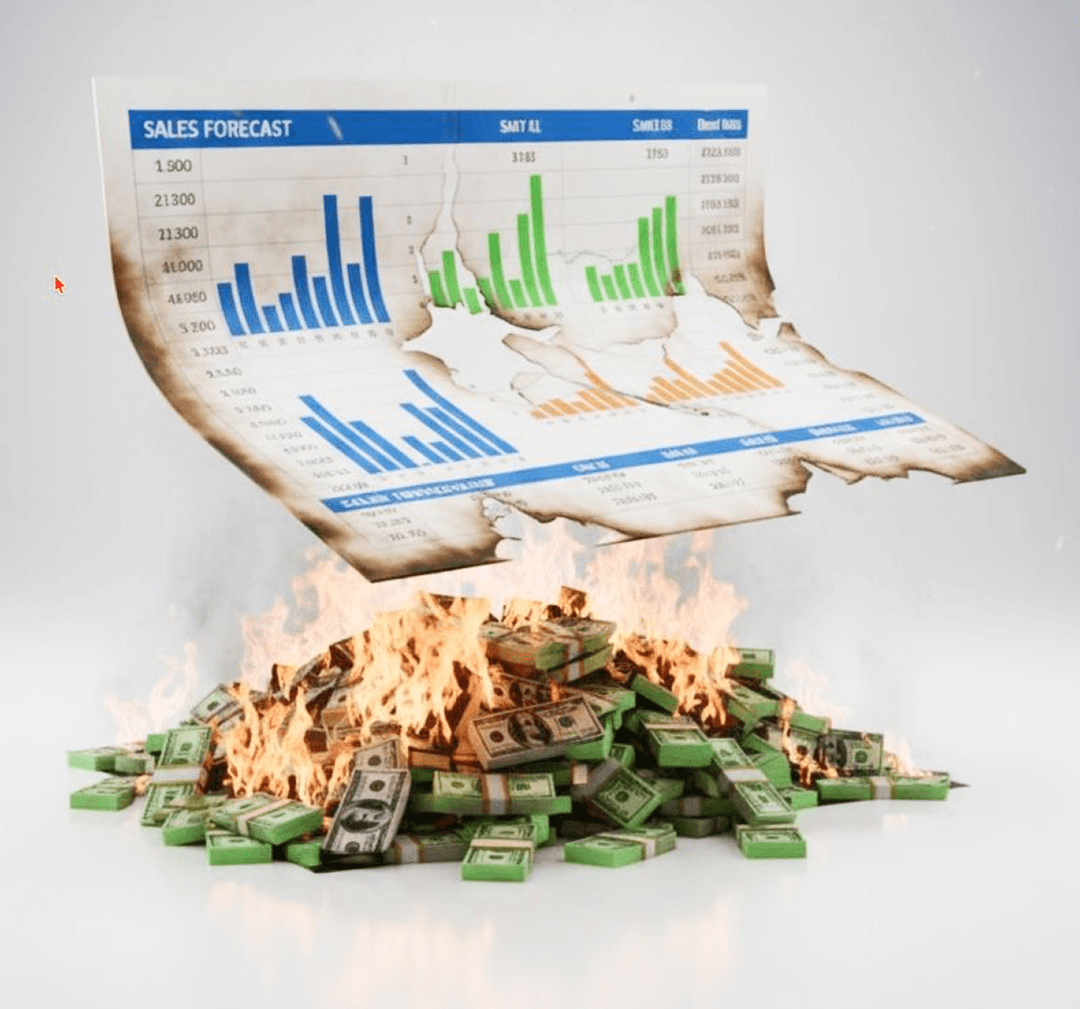
Bad Forecasts Leading to Bad Decisions: $300,000+ Annually
Your sales forecast is pieced together from eleven different spreadsheets maintained by individual reps with inconsistent formats, definitions, and update frequencies. Your confidence level in the resulting forecast is essentially zero.
But you still have to make inventory and capacity decisions based on that forecast. You order materials and schedule production, then discover you're either critically short when deals close faster than expected, or sitting on excess inventory for months when the pipeline doesn't materialize as reported. The carrying costs, expedite fees, and lost margin from these forecast-driven mistakes conservatively exceed $300,000 annually.
Institutional Knowledge Loss: $40,000+ Per Departure
Dave retires after 22 years of managing key accounts. His pricing history, customer relationships, competitive intelligence, and account knowledge walk out the door with him. The new rep asks where to find Dave's pricing files and account notes. "They're in Dave's old spreadsheets. Good luck getting them back from IT."
The productivity drag while the new rep rebuilds what Dave knew, plus the deals lost during that learning curve, costs at least $40,000. And that's just one retirement or departure.
Blind-Spot Tax: $250,000+ Per Lost Account
Your major customer has been increasingly unhappy for months. Service issues at two of their locations. Quality concerns that haven't been fully addressed. A competitor making inroads with their engineering team.
You discover this when the customer calls to inform you they're terminating the relationship and consolidating their business with your competitor. No early warning. No chance to address the issues before they became relationship-ending.
A $250,000 annual account, gone because your Excel-based system gave you no visibility into account health, service patterns, or relationship warning signs.
Total Annual Cost: $1,344,200
And this is just for one sales team of ten reps. Scale this across a larger organization, and the numbers become even more striking.
Why Excel Feels Easy
Excel feels easy because it's familiar and requires no upfront investment. You can create a spreadsheet in minutes. Everyone knows how to use it. There's no implementation project, no training requirement, no software license.
But this "ease" only exists if you consider your sales team's time worthless. If you're comfortable with your reps spending two days per week on administrative searches instead of selling. If missing hundreds of thousands in expansion opportunities doesn't concern you. If losing major accounts due to blind spots is an acceptable cost of doing business.
The One-Month Test
If you're skeptical about these costs, try tracking three things for one month:
Count the delays. How many times does a sales rep respond to your question with "Let me get back to you" because they need to search through files, check with someone else, or dig up information that should be immediately accessible?
Track the inconsistencies. How many times do numbers not match in pipeline meetings? Different reps reporting different figures for the same account. Forecasts that changed dramatically since last week with no clear explanation. Opportunity values that don't align with quotes in the system.
Identify missed opportunities. Actually, you won't see these. That's the problem. The cross-sell opportunities missed because your rep didn't know what else the customer was buying. The accounts that churned before you noticed warning signs. The expansion possibilities that never appeared on anyone's radar because the data to identify them was scattered across disconnected spreadsheets.
After one month of honest tracking, the cost of "free" Excel becomes painfully visible.
Finding Another Way
The alternative isn't necessarily a massive enterprise software implementation. It's having a proper CRM system that gives your sales team unified visibility into customer relationships, buying patterns, account health, and opportunities.
When customer information lives in a proper CRM instead of scattered spreadsheets, your reps stop wasting days hunting for data. Your team identifies cross-sell opportunities because they can see comprehensive buying patterns. Your forecasts improve because they're built on consistent, current data instead of individually maintained spreadsheets. Institutional knowledge persists when team members leave because it's captured in the system, not locked in individual files. You spot account health issues early because the system surfaces warning signs before customers leave.
At TCP Americas, we help manufacturers move from Excel-based sales management to integrated CRM systems that actually support account growth and operational efficiency. By implementing solutions like SugarCRM integrated with Epicor ERP, we help sales teams eliminate the hidden costs of spreadsheet-based selling.
Excel is only easy if your people's time is worthless, flying blind is acceptable, and losing major accounts doesn't bother you. If those costs actually do matter, it's time to find another way.
Ready to eliminate the hidden costs of Excel-based sales management? Contact TCP Americas to learn how proper CRM implementation can save your organization hundreds of thousands in wasted time, missed opportunities, and preventable account losses.


