
SugarAI
Sugar sales-i
Your ERP holds years of buying patterns. sales-i turns that data into actionable alerts so your reps know exactly who to call and what to sell next.
Proven ROI
SugarCRM sales-i customers benefit from immediate improvements in key performance indicators. We polled our customers for specific results and have published them in available case studies.
61%
Improvement in opportunity close rates
40%
Increase in sales efficiency
600 Hours
Saved annually by team preparing sales forecasts
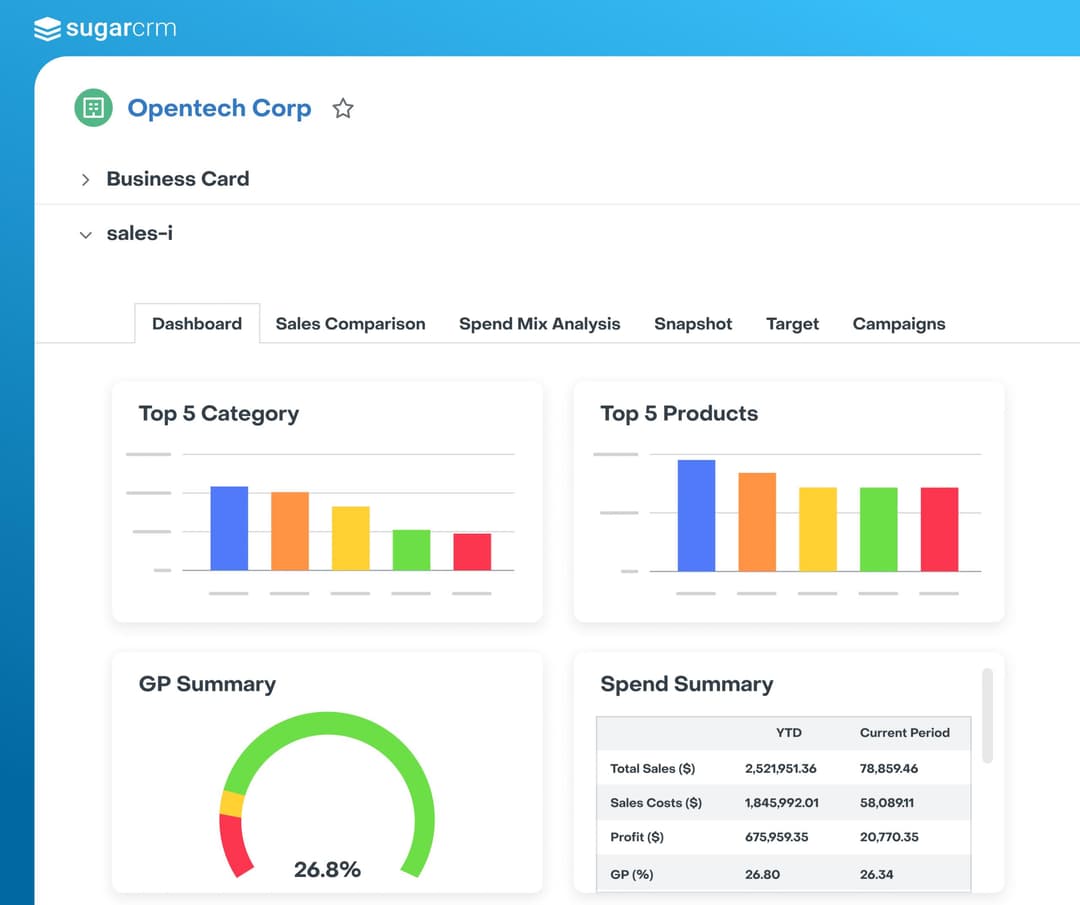
Quickly Spot Revenue Potential
Easily see where your next move is and identify opportunities to cross-sell, upsell, and link sales, all with a few clicks or taps. With easy-to-understand reports and visuals, knowing where your next revenue growth will come from has never been so simple.
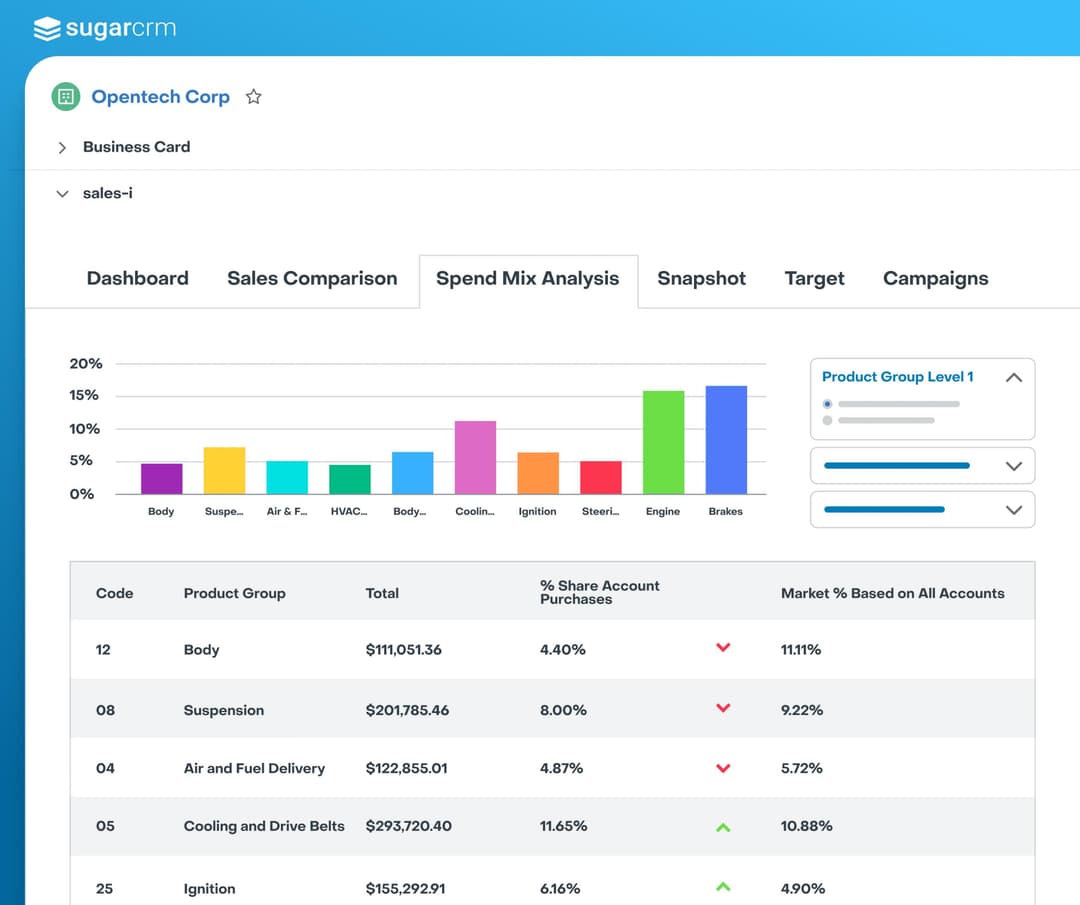
Understand the Spend Mix
Find answers to key questions like "who has bought X but not Y?" or "where are my biggest upsell opportunities?", so you can sell smarter.
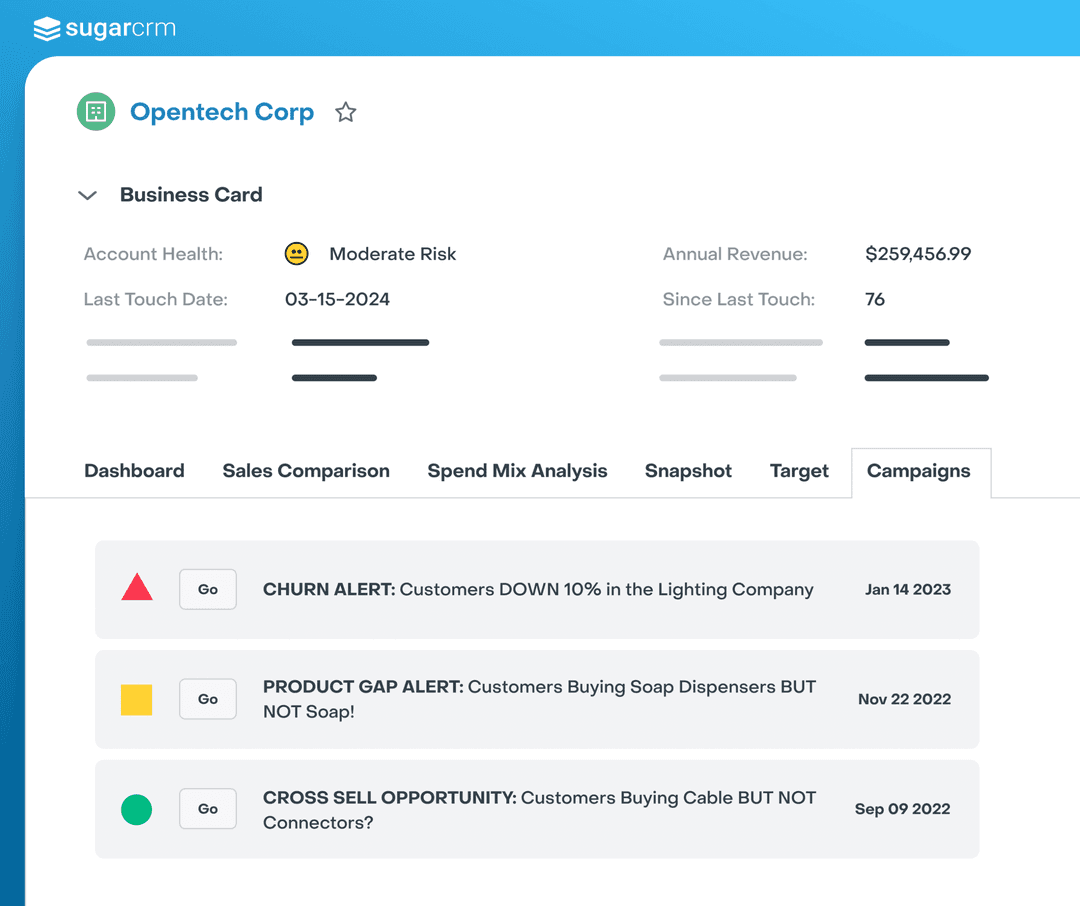
Discover Revenue Patterns with AI
Our powerful AI analyzes customer spending patterns from your ERP and translates the results to actionable campaigns for your sellers.
Frequently Asked Questions
Sales-i extracts and analyzes transactional data from ERP systems to identify trends, purchasing behaviors, and revenue opportunities across the customer base. ERP systems store critical operational information such as order histories, product purchases, pricing records, and purchasing frequency. Sales-i processes this data to generate insights that help sales teams make smarter decisions. The platform evaluates historical transaction records to detect patterns such as: Which customers purchase specific products regularly Which product combinations are commonly bought together Customers who have stopped buying previously purchased products Opportunities to increase order value or frequency Using advanced analytics and AI models, Sales-i converts these patterns into clear insights that sales teams can act on immediately. For example, if the system identifies that a customer typically buys a specific product every quarter but has not placed a recent order, the platform can flag this as a potential follow-up opportunity. Sales-i presents these insights through intuitive dashboards and reports that help sales representatives quickly understand where their next opportunities exist. This allows organizations to move from reactive sales behavior to a proactive, data-driven sales strategy based on real ERP transaction data.
Yes. Sales-i can integrate with Epicor ERP systems to analyze ERP transactional data and deliver advanced sales intelligence insights. Epicor ERP stores detailed operational and transactional information such as customer orders, product sales, pricing data, and purchasing histories. When integrated with Epicor, Sales-i accesses this data and processes it to generate actionable sales insights for CRM and sales teams. Through this integration, organizations can: Analyze Epicor sales transactions to identify revenue opportunities Detect changes in customer purchasing behavior Identify cross-sell and upsell opportunities across product lines Improve sales forecasting using real ERP data Provide sales teams with actionable insights directly within their sales workflows This ERP-CRM intelligence layer enables companies to bridge the gap between operational data and customer engagement strategies. By combining Epicor’s operational visibility with Sales-i’s analytics capabilities, organizations can transform raw ERP data into meaningful insights that drive revenue growth and improve customer relationships.
Yes. Sales-i automatically identifies upsell and cross-sell opportunities by analyzing ERP transaction data and recognizing patterns in customer purchasing behavior. The system compares historical buying data across customers, products, and industries to determine which products are frequently purchased together and which customers may benefit from additional offerings. Using this analysis, Sales-i can highlight situations where a customer is purchasing one product but not another commonly associated product, indicating a potential cross-sell opportunity. Similarly, the platform can identify upsell opportunities by detecting: Customers purchasing lower-tier products when higher-value alternatives exist Accounts that could benefit from product bundles Customers whose purchasing volumes suggest eligibility for expanded solutions Sales-i then surfaces these insights within dashboards and sales reports so sales teams can act quickly. Instead of manually reviewing large sets of transactional data, sales representatives receive clear recommendations on where to focus their efforts. This automation allows organizations to increase revenue potential by systematically identifying growth opportunities across their customer base, improving both deal size and customer engagement.
SugarCRM Sales-i is a sales intelligence and analytics platform designed to analyze transactional data from enterprise resource planning (ERP) systems and convert it into actionable insights for sales teams. Rather than relying only on CRM activity data, Sales-i evaluates historical purchasing patterns, customer buying behavior, and product demand trends directly from ERP records. The platform uses analytics and artificial intelligence to identify revenue opportunities that may otherwise remain hidden in transactional data. By analyzing customer order histories, product purchasing frequency, and sales patterns, Sales-i helps sales teams prioritize accounts, discover growth opportunities, and engage customers with data-driven recommendations. Organizations use Sales-i to improve pipeline visibility, uncover new revenue opportunities, and enable sales representatives to take proactive actions based on real customer buying behavior rather than intuition. Key capabilities include: Sales intelligence derived from ERP transaction data AI-driven opportunity discovery Identification of cross-sell and upsell opportunities Automated sales insight reports and dashboards Data-driven sales strategy and account planning For companies operating in manufacturing, distribution, and other ERP-driven environments, Sales-i enables sales teams to turn operational data into strategic revenue intelligence.
Sales-i improves sales forecasting accuracy by incorporating real ERP transaction data into the forecasting process, providing a more reliable view of future sales performance. Traditional sales forecasting often relies on manual pipeline estimates or subjective sales team predictions. Sales-i enhances this process by analyzing historical purchasing trends, order frequency, seasonal demand patterns, and product sales cycles stored within ERP systems. By using this transactional data, the platform can identify patterns that indicate future buying behavior. For example, if customers typically reorder certain products every six months, Sales-i can incorporate those patterns into forecasting models. Key forecasting improvements include: Visibility into recurring purchase cycles Identification of declining or increasing product demand Recognition of dormant accounts that may represent future opportunities Data-driven forecasting models based on real order histories Sales teams can use these insights to build more realistic forecasts, improve pipeline planning, and better align sales strategies with actual customer demand. The result is more predictable revenue planning and improved sales performance management.