
Fast Quotes for Full Quotas
How Manufacturers and Distributors Grow by Accelerating the Quoting Process and Providing Quota Attainment Visibility

Christian Wettre
EVP, GM North America

Ron Canty
SVP, North America
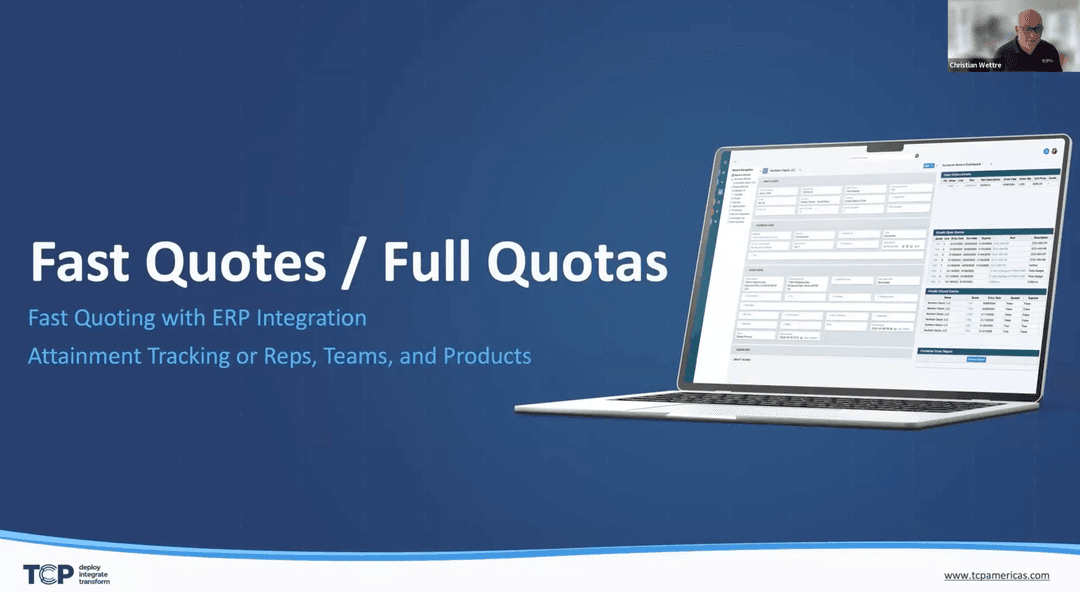
In our latest TCP webinar, “Fast Quotes and Full Quotas”, Christian Wettre and Ron Canty demonstrate how to overcome sales inefficiencies for manufacturers and distributors, and how SugarCRM closes the gap between quoting and quota attainment.
Whether you’re in inside sales, sales management, or operations, this session offers a blueprint for reducing wasted time and boosting revenue growth. You can watch the full recording below.
Fast Quotes: Compress the Sales Cycle Without Compromising Accuracy
The numbers are stark: sellers spend up to 35% of their time each week on non-selling activities, with approximately 18 hours lost navigating disconnected systems, spreadsheets, and emails to obtain answers and approvals from internal teams and to compile quotes. That’s two full days not spent engaging customers.
Enter TCP Fluent’s SugarCRM–Epicor integration. Ron Canty demonstrates how reps can transition from account overview to emailed quote in under five minutes, with no tab-hopping or rekeying. Everything from account history and product catalogs to ERP-sourced pricing and availability is available in a single view. For manufacturers with complex configurations or engineer-to-order workflows, Sugar supports formula-based line items and even allows reps to build quotes from a bill of materials (BOM) pulled directly from Epicor ERP.
Ron shows how the system flags and routes discount approvals in real-time. For example, a quote with a discount of over 20% automatically notifies a manager, locks the quote for editing, and waits for a decision, which shortens approval cycles from days to minutes.
And it all functions smoothly on mobile. If a customer requests changes on-site, reps can update and send the revised quote directly from their phone.
According to research by Accenture, B2B buyers are 57% of the way through the buying process before they talk to a supplier. Responding quickly with the right quote could be the difference between winning and losing the deal.
Full Quotas: Real-Time Revenue Visibility for Sellers and Managers
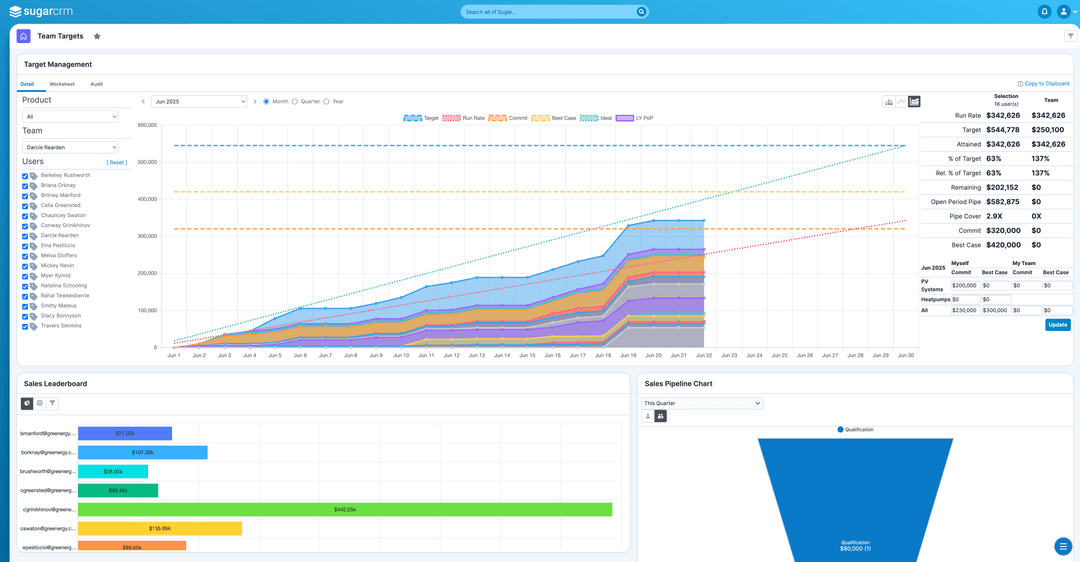
Once winning quotes are flying out the door, it’s time to track performance. However, most ERP systems don’t handle sales quotas; instead, they focus on sales transactions and reporting. That leaves reps and managers relying on Excel sheets to monitor progress, which quickly become outdated and inconsistent.
TCP’s Quota Management capability for SugarCRM changes that. Christian Wettre demonstrated a live quota attainment board that displays each representative’s progress by product, team, region, and timeframe. It’s color-coded, role-based, and includes:
- % to target and actual attainment
- Run-rate projections
- Pipeline coverage metrics
- Weekly, monthly, and quarterly visualizations
Managers can easily adjust quotas within Sugar without relying on Excel, and sellers receive instant visual feedback on their progress, eliminating the process of “spreadsheet hide and seek.”
Real-time visibility into quota attainment keeps sellers engaged and focused.
This webinar was one of our monthly series on how we help our customers use technology to reduce the 35% of seller time spent not engaging with customers.
Join our mailing list to be invited to the next ones.
Frequently Asked Questions
Real-time inventory visibility allows sales teams to verify product availability before committing to delivery dates or quantities. This reduces the risk of overpromising, improves customer trust, and helps ensure that quotes reflect actual production and inventory constraints.
Manufacturers can improve productivity by automating repetitive tasks such as quote generation, approval routing, data entry, and follow-up reminders. When sales professionals spend less time on administrative tasks, they can focus on relationship-building, opportunity development, and revenue-generating activities.
Sales teams can reduce approval delays by implementing predefined pricing rules, automated approval workflows, and role-based authorization thresholds. Automation ensures that routine quotes are processed immediately, while only exceptions require management review, significantly accelerating the sales cycle.
Customer purchase history helps sales representatives recommend relevant products, identify upsell opportunities, apply appropriate pricing agreements, and anticipate future needs. Access to historical purchasing data allows organizations to create more personalized and competitive quotes while improving customer satisfaction.
Quote automation reduces administrative work, shortens sales cycles, and enables representatives to spend more time engaging with customers. Faster response times often lead to higher win rates because buyers receive accurate proposals sooner, improving the likelihood of securing new business before competitors respond.
ERP and CRM integration provides sales teams with access to real-time order history, inventory levels, production capacity, and customer purchasing trends. This unified view enables more accurate forecasts by combining pipeline opportunities with operational data, helping businesses predict revenue and resource requirements with greater confidence.
Manufacturers should monitor quote turnaround time, quote-to-order conversion rate, average discount percentage, approval cycle duration, win rate by product line, and revenue generated per quote. Tracking these metrics helps identify bottlenecks, optimize pricing strategies, and improve overall sales effectiveness.
Manual quote management often results in inconsistent pricing, delayed responses, version control issues, approval delays, and limited visibility into sales performance. These inefficiencies can lead to lost opportunities, reduced margins, and a poor customer experience.
As manufacturers grow, quoting becomes more complex due to customized products, fluctuating material costs, customer-specific pricing agreements, and multiple approval layers. Without integrated CRM and ERP systems, sales teams often rely on outdated spreadsheets or disconnected data sources, increasing the risk of pricing errors. Centralized quoting processes improve accuracy, reduce rework, and help maintain profitability.
When CRM and ERP systems remain synchronized, customer information, order status, pricing data, and service history are consistently available across departments. This eliminates information silos, enables faster responses to customer inquiries, and creates a more seamless buying experience from initial quote through fulfillment.


