
The Power of Actionable Intelligence: Breaking Down Silos with CRM

Ron Canty
SVP, North America
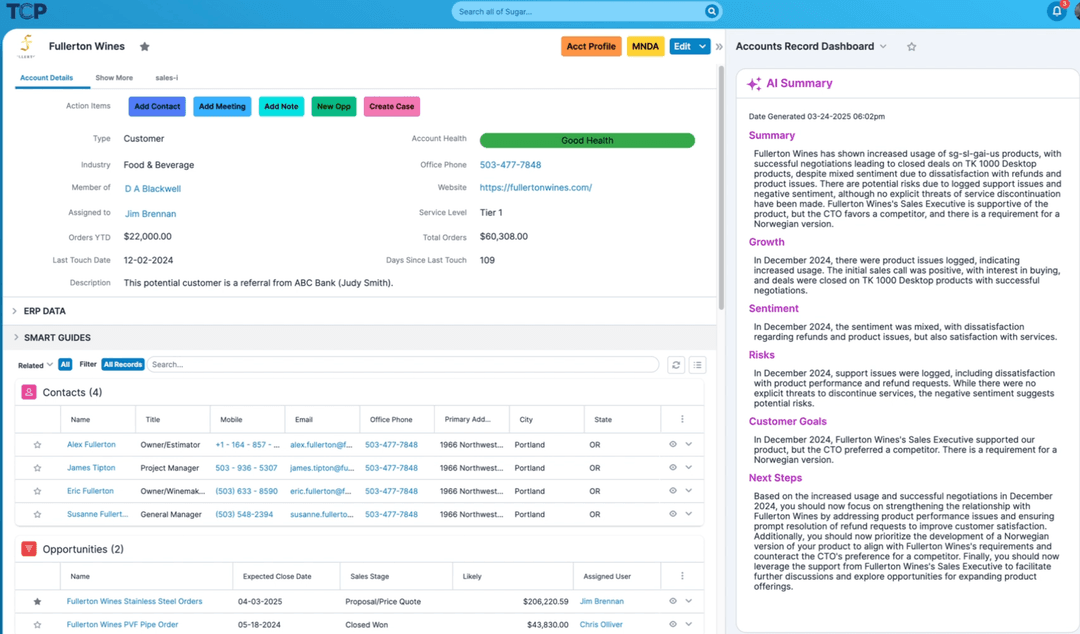
In today’s data-driven world, most organizations have mastered the art of collecting vast amounts of information. Over time, many have amassed excellent datasets teeming with potential. Yet, all too often, this valuable data remains trapped in silos—disconnected pools of information scattered across departments and systems. These silos hinder the ability to integrate data with other critical insights, leaving organizations with only fragments of the full picture. Without that holistic view, they miss out on actionable intelligence—the kind that fuels accurately informed decisions rooted in facts.
Actionable intelligence goes beyond merely possessing data; it’s about connecting it, understanding it, and highlighting what’s most relevant. When information stays fragmented, decision-makers waste precious time cobbling together incomplete insights, often jumping between multiple applications. But when those barriers are torn down and data is centralized, organizations gain sharper insights that drive better outcomes.
Business leaders are increasingly aware of the need to dismantle these data silos. They’re adopting intuitive, powerful tools like machine learning (ML) and AI-driven insights, streamlined dashboards, and centralized platforms to unify their information—no advanced degree required. One standout solution we offer our clients is SugarCRM, a robust platform that aggregates data from across the organization into a single, cohesive hub and presents it to users based on the needs of their role. By centralizing information, CRM not only delivers actionable intelligence but also eliminates the time wasted navigating a patchwork of separate applications to piece together a comprehensive view.
What sets CRM apart from data that is simply aggregated and summarized by a BI tool is CRM's ability to also incorporate real-time interactions like Calls, Meetings, Emails and Web Hits into an efficient presentation that is relevant and interactive to the user. This assimilation transforms CRM into a strategic tool that empowers users across all roles—from sales reps to customer service teams to executives. Imagine a sales manager preparing for a client call with an AI generated Summarization supported by a complete history of past interactions and potential orders, a customer support agent resolving an issue with instant access to all order details and prior communications, or a marketing team tailoring campaigns based on unified customer insights—all within the same platform. By weaving these interactions into the fabric of centralized data, CRM gives organizations a massive competitive advantage, enabling faster, smarter, and more coordinated action.
The results speak for themselves. By collaborating with our customers to effectively configure and integrate SugarCRM into their ecosystem, we see employee productivity increase by at least 17%, as teams shift from data hunting to data-driven execution. Customer issues, once slowed by fragmented insights, see resolution times cut by as much as 50%. And to top it off, organizations typically enjoy revenue increases of at least 11%, driven by quicker market responses and more effective decision-making. It’s no longer just about collecting data—it’s about turning it into a strategic asset that keeps leaders out of spreadsheet overload and focused on growth.
Our clients also appreciate pairing SugarCRM and Epicor with tools like Fluent, which transforms vast datasets into clear, actionable insights with exceptional ease. Together, they bridge the gap between siloed information and a unified, interactive understanding, empowering organizations to act with confidence. In a world where data is abundant but often disjointed, centralizing it with solutions like SugarCRM—and enhancing it with real-time interactions— isn’t just a convenience; it’s a game-changer.
The bottom line? Don’t let silos hold your organization back. Centralize your data, integrate it with the interactions that drive your business, and turn information into action. With TCP and CRM, you’re not just breaking down barriers—you’re building a foundation for efficiency, collaboration, and a competitive edge that’s tough to beat.
Frequently Asked Questions
Actionable intelligence improves forecasting by combining historical sales performance, active opportunities, customer purchasing behavior, market trends, and real-time pipeline data. Instead of relying on subjective estimates, organizations can use data-driven insights to generate more reliable forecasts, allocate resources effectively, and identify revenue risks earlier in the sales cycle.
Business intelligence focuses on collecting, organizing, and visualizing data through reports and dashboards. Actionable intelligence goes a step further by translating that data into specific recommendations and next actions. While business intelligence answers "What happened?", actionable intelligence answers "What should we do next?" This distinction helps organizations make faster and more effective operational decisions.
ERP systems manage operational and financial data, while CRM systems manage customer-facing activities. When these systems operate independently, decision-makers lack a complete picture of customer relationships and business performance. Integrating ERP and CRM creates a unified source of truth that enables teams to view customer orders, account history, inventory availability, service issues, and sales opportunities from a single platform.
Artificial intelligence strengthens CRM intelligence by automatically analyzing large volumes of customer and operational data. AI can identify buying patterns, predict customer behavior, recommend next-best actions, prioritize leads, summarize customer interactions, and uncover hidden revenue opportunities. This reduces manual analysis while improving the speed and accuracy of business decisions.
Organizations should track metrics that measure both customer engagement and business performance, including:
- Customer retention rate
- Sales pipeline velocity
- Opportunity win rate
- Customer lifetime value
- Lead-to-customer conversion rate
- Average deal size
- Forecast accuracy
- Customer satisfaction scores
- Cross-sell and upsell revenue
Monitoring these KPIs helps businesses evaluate whether CRM intelligence initiatives are producing measurable results.
Organizations often struggle with:
- Disconnected software systems
- Duplicate customer records
- Inconsistent data entry processes
- Legacy applications
- Departmental ownership conflicts
- Poor data governance practices
Addressing these challenges requires both technology integration and organizational alignment to ensure all teams work from consistent, accurate information.
CRM actionable intelligence helps organizations move beyond reporting historical data by identifying patterns, trends, and future opportunities. By combining customer interactions, purchasing behavior, sales activity, and service history, businesses can forecast revenue, anticipate customer needs, identify churn risks, and prioritize sales opportunities before issues arise. Predictive decision-making allows teams to act proactively rather than react after problems occur.
Manufacturers can use CRM intelligence to identify declining purchasing patterns, delayed reorder cycles, unresolved service issues, and reduced customer engagement. Automated alerts and analytics help account managers intervene before customers disengage. By proactively addressing risks and identifying upsell opportunities, manufacturers can strengthen customer relationships and improve long-term retention rates.
Data governance establishes the policies, standards, and processes that ensure CRM data remains accurate, complete, and trustworthy. Without strong governance, actionable intelligence loses value because decisions are based on unreliable information. Effective governance includes data ownership, validation rules, duplicate prevention, user training, and ongoing data quality monitoring.
Businesses can evaluate ROI by measuring improvements in operational, sales, and customer service metrics. Common indicators include increased revenue, faster sales cycles, improved forecast accuracy, higher customer retention, reduced manual reporting effort, increased employee productivity, and better customer satisfaction scores. Comparing these outcomes against implementation and operational costs provides a clear view of the investment's business impact.


