
Tecnas: Flexibility, Security, and Speed in the Cloud with Epicor Kinetic and TCP
In the fast-paced food industry, operational agility, strict traceability, and the ability to adapt to technological changes are crucial competitive advantages.

Tecnas S.A. BIC is a leading Colombian food industry company and a leader in the design, manufacture, and marketing of ingredients and supplies for the sector.
Founded in 1987, it is headquartered in the municipality of Itagüí, one of the region’s most important economic and industrial centers, which is part of the Aburrá Valley metropolitan area in Antioquia. It has offices in Barranquilla, Cúcuta, Bucaramanga, Bogotá, Cali, and Pereira; distributors at strategic locations throughout the country; and sales agents in Ecuador, Peru, Central America, and the Caribbean.
It is part of the Alico Organization, a conglomerate of companies—all with more than 35 years in the market—dedicated to providing solutions for the food industry.
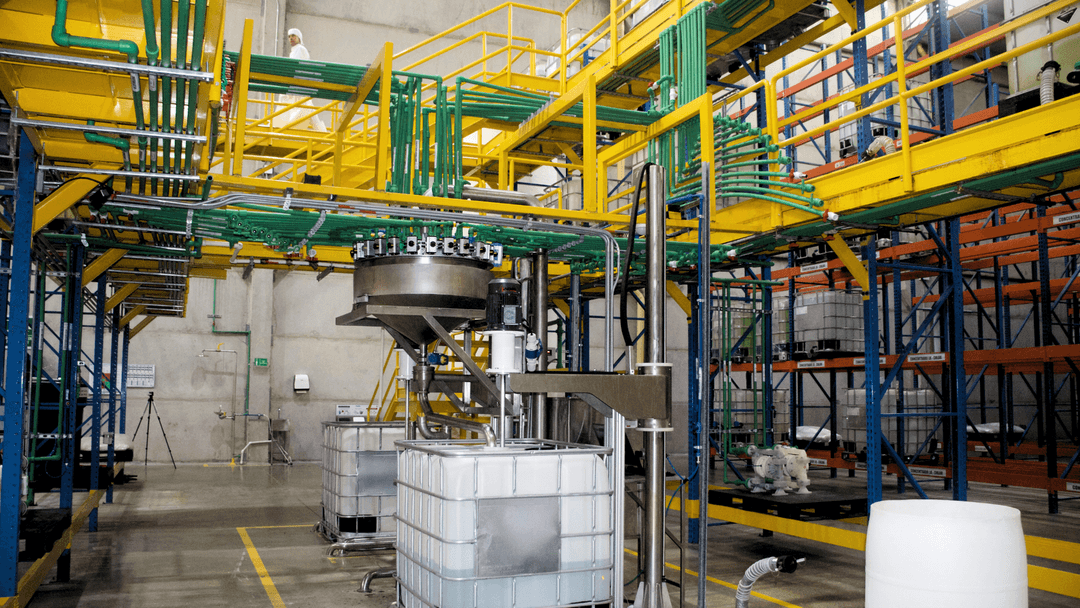
Tecnas has consolidated its leadership not only through the excellence of its products, the warmth of its service, and its innovative and research-driven spirit in a health and wellness portfolio, but also through a cutting-edge vision for its digital infrastructure. As a Benefit and Collective Interest Corporation (BIC), the organization balances economic growth with social and environmental impact—a pillar that has guided its most recent technological milestone: the full migration of its ERP system to the cloud using Epicor Kinetic.
In this conversation, Iván Rebolledo, CRO of Technology Coast Partners, and Manuel Vanegas, Security and Technology Analyst/Programmer at Tecnas S.A. BIC, who led the migration project, discuss the company’s technological evolution.
The Evolution of ERP at Tecnas
Tecnas S.A. BIC’s journey with Epicor solutions has been marked by a constant pursuit of modernization and optimization of its business processes.
In 2013, the company migrated from a traditional desktop system to Epicor 9 in an on-premise configuration. In 2018, it upgraded its platform to Epicor 10. Although it remained on-premise, this prepared the infrastructure for future challenges.
The onset of the global COVID-19 pandemic in 2020 served as the catalyst for the Kinetic Era. Mobility restrictions exposed the limitations of the local physical infrastructure, prompting the technical team to evaluate alternatives that would ensure business continuity in a remote, flexible, and decentralized manner. Tecnas successfully went live in the cloud with Epicor Kinetic Cloud in 2023.
Key Reasons for Migrating to the Cloud
Two critical factors motivated the company to move permanently to the web-based cloud:
- Flexibility and barrier-free connectivity: Under the traditional model, accessing the ERP required the use of corporate laptops configured with Virtual Private Networks (VPNs). This resulted in fixed connectivity costs, complex IT configurations, and inflexibility for field staff. The cloud enabled secure access to the system from anywhere in the world and via any device (smartphones, tablets, or web browsers).
- Sustainability and environmental responsibility (BIC Approach): Aligned with its mission as a BIC company, Tecnas identified that maintaining local data centers entailed significant “hidden costs” in environmental terms. The migration enabled substantial savings in electricity consumption and industrial air conditioning systems used to cool physical servers, reducing the organization’s operational carbon footprint.
Modular Implementation Strategy and User Adoption
To mitigate users’ natural resistance to change, a hybrid and phased approach was adopted, taking advantage of the temporary coexistence of Epicor Kinetic’s desktop (Smart Client) and web environments. The migration was carried out in several phases:
- Phase 1: Configuration and Parameterization: Internal system preparation and configuration forms were routed exclusively to the Kinetic web interface, gradually familiarizing users with the new visual environment.
- Phase 2: Reporting and Query Modules: Subsequently, all report-generation forms were migrated one after another. As employees experienced the speed and fluidity of web-based queries, they began to voluntarily switch away from the desktop application.
- Phase 3: General Operations by Department: The operational migration deliberately began with the sales department, considered one of the most complex due to its high mobility. The success and satisfaction of the sales team when providing quotes from their mobile devices served as a source of enthusiasm that positively inspired the rest of the departments. Subsequently, the Logistics and Production departments were migrated sequentially, followed by Accounting and Quality Control.
Radical Streamlining of Custom Developments
One of the project’s greatest achievements was the optimization of the code and the simplification of the architecture. In its native Epicor 9 version, Tecnas had accumulated nearly 1,500 custom modifications or developments created to address specific business needs.
Over a six-month period leading up to the migration, process leaders thoroughly reviewed their modules. The goal was to identify which legacy customizations were already natively included in the standard Epicor Kinetic suite.
Thanks to this meticulous analysis and the adoption of native low-code tools such as Application Studio, Epicor BPM, and integrated APIs, Tecnas achieved a drastic reduction in its technical debt and went to just 110 custom developments in the cloud. This resulted in a massive reduction in IT maintenance time, simplified validation processes, and ensured that future platform updates would be carried out transparently and without disrupting operations.
"Epicor has so many tools, so many options, and has already adopted so many programs that it has integrated into its software that I would say there is practically not a single solution or development that won’t soon have its counterpart in Kinetic Web."
Impact of the Migration on Business Operations
The transition to Epicor Kinetic Cloud positively transformed business dynamics on multiple strategic fronts:
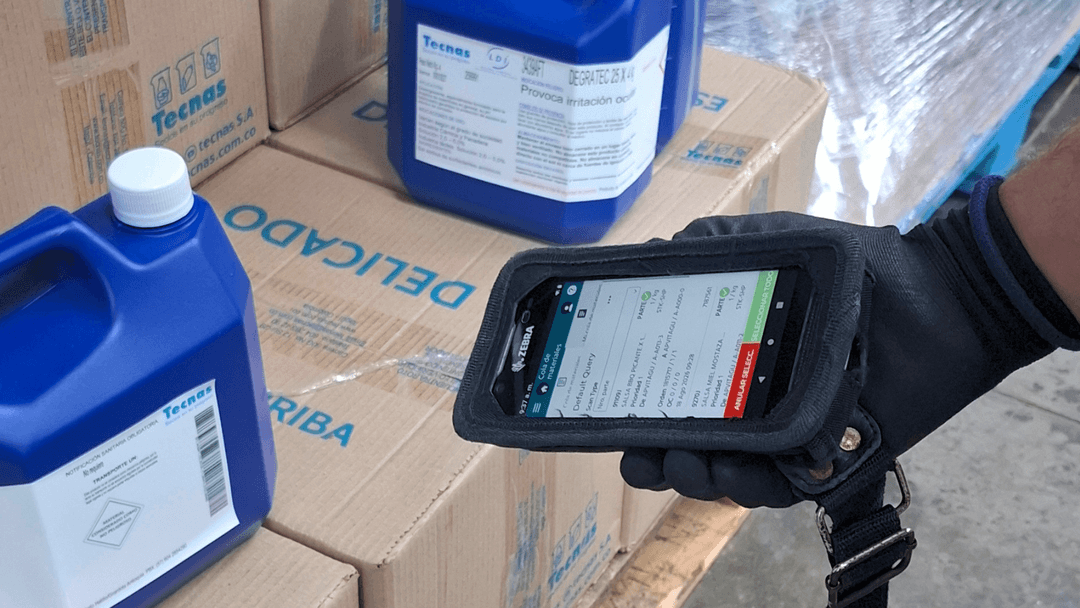
Operational efficiency and mobility in the plant and in the field
- Agile Sales Force: Sales representatives no longer need to carry laptops to manage proposals; they now generate quotes, check inventory, and close deals in real time directly from their cell phones, streamlining the sales cycle.
- Real-time on-site monitoring: In Tecnas’s sprawling production facilities, managers and coordinators are no longer tied to fixed workstations. They can walk the factory floor, verifying inventory movements and output from mobile devices, substantially increasing productivity.
- Efficient Executive Management: Managers and decision-makers instantly access dynamic dashboards tracking sales, productivity, and consumption from their mobile devices, eliminating reliance on email chains and isolated manual reports.
Automation of Critical Processes
The cloud architecture, powered by updatable Business Activity Queries (BAQ) and Application Studio, made it possible to eliminate tedious semi-manual tasks. A clear example can be found in the Quality Control department. With Kinetic, a unified dashboard was designed that empowers users to audit, select, and process massive batches of 20, 50, or more scrap records automatically with a single click, drastically accelerating processing times and eliminating the need for manual, item-by-item processing.
Certifications, Compliance, and Superior Traceability
As a high-profile food company in Colombia, Tecnas is subject to rigorous audits by regulatory bodies and international standards—including ISO certifications and HACCP food safety systems.
Epicor’s built-in robustness in terms of traceability for purchases, receipts, payments, and logistics has been described by official bodies as the “fundamental guarantee” of regulatory compliance. The ERP provides levels of auditing and batch tracking that exceed standard legal requirements, enabling the company to successfully navigate complex audits that previously took weeks to complete.
Future Outlook: Automation and Artificial Intelligence
For Tecnas S.A. BIC, the success of the cloud migration has reshaped the company’s long-term vision, propelling it toward the comprehensive automation of its physical assets:
- Integrated Factories of the Future: The company is currently executing a large-scale expansion plan that includes the relocation and construction of new, large-scale production plants, designed from the ground up to operate under a 70% automated model, natively interconnecting directly with the cloud-based ERP to synchronize physical production with the administrative layer in real time.
- Adoption of Advanced Technologies: The technology roadmap calls for the intensive use of ERP APIs and advanced tools such as Epicor Content Management (ECM), Epicor Mobile Warehouse, TCP’s Fluent platform, and the use of integrated Artificial Intelligence (AI) models to optimize predictive maintenance and intelligent supply chain planning.
TCP & Epicor: Expert Support
A key pillar behind Tecnas’ successful technology transition has been the close collaboration and support provided by the professional services teams.
The partnership with TCP and Epicor enabled testing in robust pilot environments prior to going live. Additionally, the transition to managed cloud services and database security provided by Epicor freed up valuable time for the internal IT team to focus on business innovation.
"I have more free time because I don’t have to worry about the database, the investment, or maintenance. Since we migrated to the cloud, I’ve been able to focus on my tasks during normal working hours. I simply check the calendar and notify my team members in their respective areas so they can plan around the times when an update will take place. It’s even made a big difference in my personal life."
Success Takeaways
Tecnas S.A. BIC’s experience offers valuable lessons for any manufacturing or distribution organization evaluating its definitive leap toward digital transformation in the cloud:
- Less is more in the cloud: Before blindly replicating legacy code and custom developments, it is essential to conduct a thorough audit of the standard modules of the modern solution. Leveraging native capabilities reduces software complexity, streamlines migration, and ensures seamless updates in perpetuity.
- Centralization as a business strategy: Maintaining data integrity under the principle that “everything must be created and reside within the ERP” reduces information fragmentation and the scattering of data across external tools, enabling true flexibility and operational automation.
The true transformation of Tecnas S.A. BIC is not measured solely by the number of local servers shut down, lines of code optimized, or automated processes on the factory floor. It is also measured by the peace of mind of a team that now collaborates without barriers or distance, by the pride in honoring an industrial legacy with a steady stride toward the future, and by the fulfilled promise to actively protect the planet that sustains them. By moving its technology to the cloud, Tecnas not only simplified its operations; it unlocked the potential of its people, demonstrating that the union of technological innovation with a human and sustainable purpose is the starting point for continuing to responsibly nurture the future.
Headquarters
Itagüí, Antioquia, Colombia
Founded
1987
Company size
201-500
Industry
Food
Website
tecnas.com.co/SOLUTIONS

RESULTS
Flexibility, security and speed
Agile Sales Force
Real-time on-site monitoring
Efficient Executive Management
Superior traceability


