
IPSL, a strategic B2B industrial partner in Mexico supported by TCP/Epicor
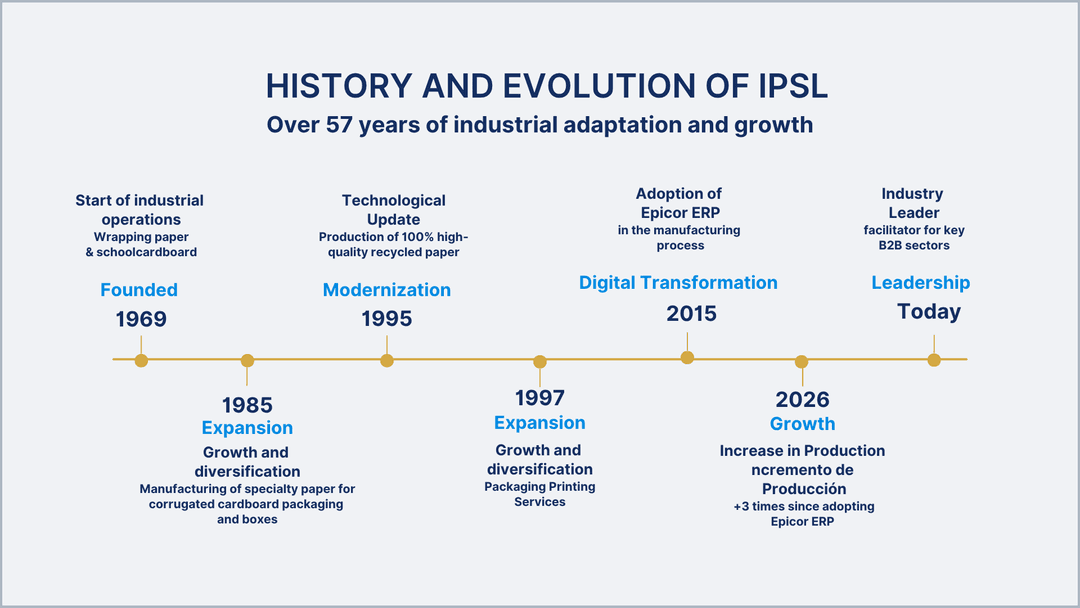
Since its founding in 1969, with the aim of manufacturing paper for grocery stores and school cardboard, Industrial Papelera San Luis (IPSL) has increased its production fiftyfold.

Located in the El Bajío region—the industrial heart of Mexico and one of the most dynamic manufacturing and logistics clusters in Latin America—Industrial Papelera San Luis (IPSL), beyond its production figures, is a fundamental pillar of the industrial ecosystem of San Luis Potosí (SLP). Its influence can be categorized into three main pillars: environmental leadership through the circular economy, its role as a strategic B2B partner, and its contribution to local professional standards.
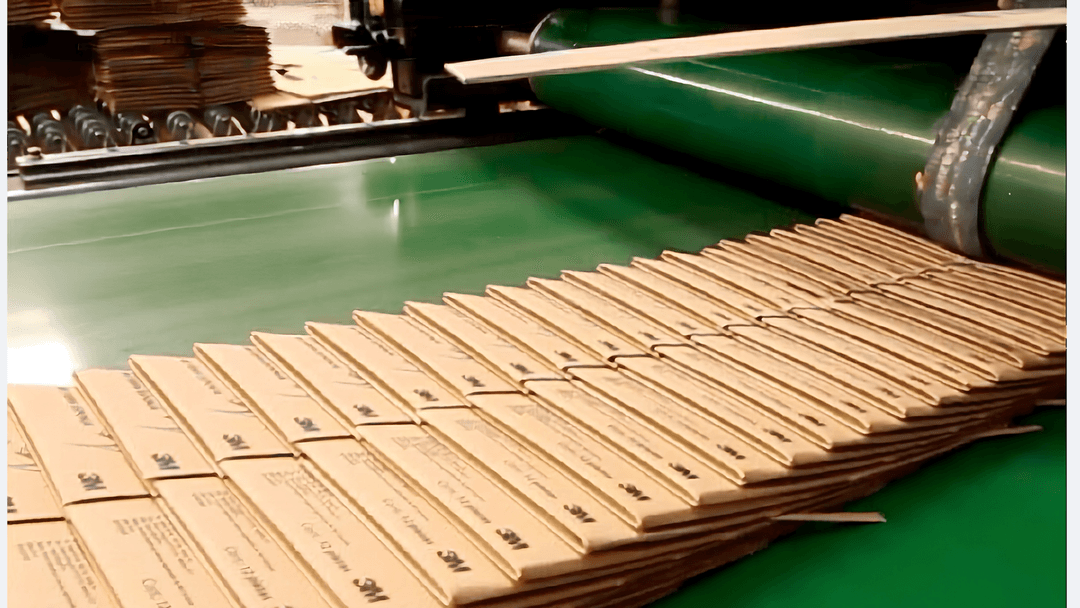
Since its founding in 1969, with the aim of manufacturing grocery-grade paper and school-grade cardboard, Industrial Papelera San Luis has increased its production fiftyfold. It currently operates under a robust vertical integration model, ranging from paper and cardboard recycling to finished printed boxes, enabling it to manage large-scale orders without compromising quality or delivery times.
About the Company and its Corporate Strategy
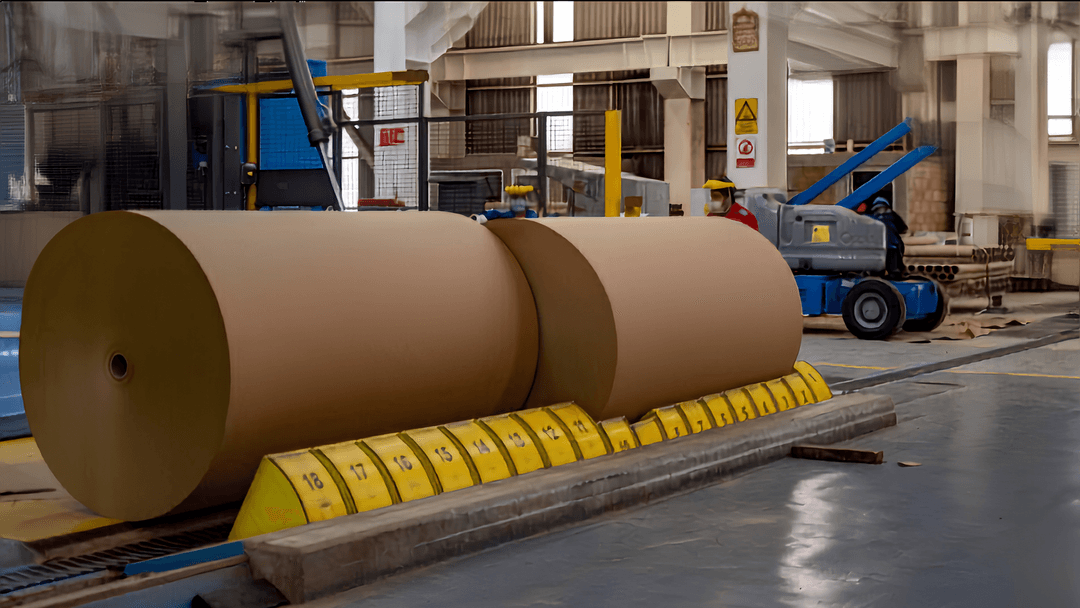
Strategically located at Eje Sahop 210 in the San Luis Potosí Industrial Zone, IPSL occupies a prime location in an industrial park known for its high level of manufacturing activity and logistical connectivity. The company is 100% Mexican-owned, based in San Luis Potosí, and specializes in transforming paper and cardboard waste into comprehensive sustainable packaging solutions. It is one of the region’s leading companies.
IPSL’s philosophy is grounded in a mission focused on quality and customer service, while simultaneously fostering the well-being of its employees and promoting respect for the environment. Its organizational culture is built on four core values: honesty, humility, respect, and strength.
Key Milestones
IPSL’s track record reflects a consistent ability to adapt industrially over more than 57 years of market experience, increasing production by a factor of 50 since its founding, demonstrating significant industrial growth and strong market adaptation.
The company operates 24/7, this ensures the operational resilience needed to serve as the "invisible facilitator" that supplies master cases and protective packaging to the automotive, pharmaceutical, agribusiness, and home appliance sectors in the region.
The Need for Change: Operational Challenges Before Epicor ERP
Before consolidating its digital transformation, IPSL experienced the typical complexities of a rapidly expanding local company, with a very flat organizational chart and management infrastructure, according to its CEO, Antonio Gutiérrez, who notes that the business’s rapid growth turned traditional methods into critical bottlenecks.
The company used an extremely rudimentary administrative system. In his words: “We used it practically like a typewriter.” It was used exclusively to enter basic text and print invoices, while accounts receivable and tax accounting were handled entirely manually and in isolated spreadsheets. For managing product engineering and design specifications, they relied on internally developed software that operated independently of the finance system.
Considering that IPSL handles around 2,000 consolidated product SKUs (including cardboard sheets, paper sheets, and finished boxes) that are actively invoiced each month, the lack of integration was unsustainable. Previous attempts to implement two different ERP platforms resulted in failures and operational "nightmares," because the software did not adapt to the volumetric logic of cardboard or demanded deliverables that the internal organizational infrastructure could not handle.
When evaluating final solutions, IPSL ruled out several ERP systems. The technical analysis determined at the time that the complexity involved in making basic modifications and generating customized reports would require excessive reliance on external technical support.
Implementation of Epicor ERP: Agility and Standard Adoption
The decisive factor that drove IPSL’s adoption of Epicor was the agility of the technical response during the demonstration phase by the various technology solution providers. While other solutions failed live during demonstrations or took weeks to present mockups, Epicor’s technical consultants, with support from TCP, configured a customized screen in less than 24 hours that replicated 70% of the company’s internal product specification software.
"We requested the modification, they went back to the hotel, and the next day at noon they were presenting a screen to me. I’d say it was maybe 60–70% identical to what I was using in my internally developed software. And that’s when we fell in love with the Epicor system."
The implementation followed a strict phased methodology with clearly audited deliverables. The project was successfully completed, and the knowledge transfer was so efficient that IPSL had hours left over from the original implementation package, which were reserved for post-go-live consulting.
The “Parallel Launch” Mistake
Ten years after this successful implementation, in an interview given by Antonio Gutiérrez, CEO of IPSL, to Ivan Rebolledo, CRO of Technology Coast Partners (TCP), he recounts an experience that has become part of the organization’s folklore: On the third day of the official launch (“Go-Live”), IPSL faced a crisis situation due to an internal decision: to attempt to run the old system and the ERP simultaneously in parallel, in order to expedite invoices for products that had not yet been fully registered in the Epicor database. Gutiérrez says that this hybrid strategy was “a nightmare,” an absolute failure that caused deep despair, to the point of considering shutting down the new ERP. The consultants recommended that the definitive solution was to adopt a radical approach: completely halt the obsolete software and force the entire industrial operation to flow exclusively through Epicor ERP. Within three days, the data ecosystem stabilized.
Engineering Customization vs Standard Processes
IPSL applied a fundamental corporate principle to the consultants: “Don’t cater to all my whims because I don’t want complications in future updates.” The company decided to keep the ERP as standard as possible in its transactional and manufacturing flows, adapting only the database tables necessary to incorporate 30 to 35 additional fields specific to the tolerances, dimensions, and strengths of its packaging specifications.
This approach forced the organization to align with the system’s logical and unbreakable sequence: “steps 1, 2, 3, and 4”—as Gutierrez describes them. Under the previous traditional system, it was common to ship materials to customers before recording them in inventory or issuing the corresponding invoice. With Epicor, the system physically restricts goods from leaving the plant or warehouse if the previous steps have not been meticulously followed, eliminating operational informality and providing absolute control.
Tangible Benefits of Digitization
The implementation of Epicor ERP enabled a process that spans IPSL’s entire vertical integration model:
- Full traceability of raw materials: IPSL records in detail every bale of waste that enters the recycling center, identifying the supplier, date, fiber type, moisture controls, and fiber length tests conducted in its own on-site laboratories. This information is reflected in real time on the paper machine’s turbines. In the event of any variation in the quality or performance of the final product, engineers can trace the exact batch back to the original bale.
- Precise production monitoring: The system captures exact metrics on kilograms, linear meters, and square meters processed by the paper machine, immediately correlating theoretical engineering costs and consumption with actual production results. Written reports were replaced by dynamic queries and real-time dashboards on screens.
- Inventory and storage control: Due to physical space limitations in the plant, not much finished product is stored; only 15–20% goes through the warehouse, with the rest going “directly to the truck.” Epicor resolved the “horror stories” of the past, where material would get lost inside the plant and it was sometimes faster to remanufacture an order than to search for it. Now, using QR codes and scans, all movements of rolls and boxes are recorded in real time. Nothing gets lost.
- Super competitive delivery times: Visibility into the production line allows sales to check inventory and order status immediately. This enables them to operate under a “just-in-time” model with response times of 3 to 4 days (and as fast as 24 hours for urgent orders), well below the 2 or 3 weeks typical in the industry.
Impact on Growth and Certifications
- Business Growth: Since IPSL began using Epicor in 2015, the company has tripled (or slightly more) its production. Gutiérrez emphatically states that this growth would have been impossible without Epicor.
- Compliance and Audits: Thanks to Epicor’s historical batch tracking, they obtained FSC (Forest Stewardship Council) Certification—specifically for wood fiber chain of custody— without any extraordinary effort, passing the audit with ease. Similarly, the system enables them to successfully navigate ongoing audits from clients in demanding sectors such as food and automotive.
- Profitability: Although they are not strictly financial factors, the order and operational consistency that Epicor ERP brought to the operation have directly translated into a very significant improvement in profitability.
"We have practically tripled in size since we started using Epicor in 2015... I can’t imagine Papelera's growth without Epicor... that growth would have been impossible—managing the business without connectivity, the flow of information, and the ability to check data in real time... we wouldn’t be the size we are today."
Future Outlook and Technological Transformation
Industrial Papelera San Luis plans to reach a monthly production of 9,000 tons of paper, 5,000 tons of corrugated cardboard, and 15 million boxes over the next 5 years. Its 10-year plans include expanding into other states across the country with corrugated cardboard and box plants, thereby transforming the total volume of paper produced.
With the consolidation of its on-site processes, the company is projecting its business strategy toward an even more advanced digital transformation:
- Migration to the Cloud (Cloud Computing): The organization is evaluating the transition of its on-premise technology infrastructure to a cloud-based model by the end of 2026. The primary objective is to strengthen cybersecurity, guarantee continuous automated backups, and ensure seamless system updates that do not halt plant operations.
- Artificial Intelligence with Fluent: IPSL has initiated discussions with TCP consultants to implement Fluent’s AI solutions connected to Epicor. Initial testing points toward the development of advanced predictive models focused on demand forecasting, material requirements planning (MRP), and optimization of recycled fiber inventory control.
Key Takeaways
- Standardization trumps operational whims: The success of IPSL’s digital transformation lies in aligning its internal culture with the best practices of a standard ERP system, limiting excessive customizations to the actual needs and specificities of its product engineering.
- Sustainability requires a digital foundation: Successfully managing a massive circular economy model demands rigorous control of real-time inventory and data; the "digital thread" is what makes industrial recycling profitable and scalable.
- Automation eliminates the human error factor: Replacing manual data entry and reporting with real-time interfaces reduces millions in fictitious losses caused by typos, freeing up staff time for higher-value analytical tasks.
Expert Support
IPSL’s technological evolution has been supported by TCP’s guidance since its implementation, through the design and coordination of methodologies aligned with digital transformation and best practices in the paper and cardboard manufacturing industry.
IPSL rates the professional service provided by TCP as highly efficient and technically rigorous, establishing the ideal foundations for a successful transition to new circular economy industry regulations and future applications of predictive artificial intelligence in the Latin American market.
A Lasting Legacy
Today, with more than 57 years of history in its DNA, Industrial Papelera San Luis (IPSL) has established itself as much more than an industry leader; it is a driving force behind the economy of San Luis Potosí. Looking back, the days when boxes went missing in the warehouse or internal software operated blindly are a thing of the past. Thanks to its transformative partnership with Epicor and the expert guidance of TCP, IPSL has embarked on a digital journey that bridges environmental responsibility with maximum operational efficiency. It is not limited to impeccable metrics, FSC certifications, or large-scale production, but embodies the pride of a 100% Mexican company that, step by step and with unwavering discipline, managed to grow its business and demonstrate that sustainability can be profitable. With its sights set on a future driven by artificial intelligence and cloud computing, IPSL is not only adapting to the future but inspiring an entire region, demonstrating with heart and reason that when corporate vision embraces technological rigor, the impact transcends the boundaries of manufacturing to become a lasting legacy.

Headquarters
Zona Industrial 1 Sección, Eje Centro Sahop 210, San Luis Potosí, San Luis Potosí, MX
Founded
1969
Company size
51-200
Industry
Paper & Board
Website
www.ipsl.com.mxSOLUTIONS

RESULTS
- Full traceability of raw materials
- Precise production monitoring
- Inventory and storage control
- Highly competitive delivery times
- Business growth
- Smooth certification processes
- Profitability


